
How to Build Better Control in Your Tennis Shots
Control is the difference between hitting lines and just hitting balls. It’s about consistent contact, predictable ball flight and the ability to place shots under pressure. Developing control requires technical refinement, deliberate physical training and smart practice habits.
This guide breaks down practical steps you can apply on and off court to tighten your timing, stabilize your body and refine your feel. Wherever possible, I’ll point you toward tools and training categories that help accelerate progress.
To start improving immediately, consider pairing skill work with focused reaction drills to sharpen timing: reaction training equipment can be a quick, effective addition to practice sessions.
Understand what “control” really means
Control combines four elements: consistent contact point, efficient swing path, appropriate racquet head speed and stable body support. If any of those areas wobble—literally or figuratively—accuracy falls apart. Your job as a player is to isolate which element is breaking down during misses and then target it with drills and strength work.
Build a reliable foundation: stance, grip and swing path
Control begins before the swing. Use a neutral, balanced stance that allows weight transfer through the shot. A slightly closed stance helps for groundstrokes when you want to drive and direct the ball; an open stance can be controlled, but requires stronger torso rotation.
Grip adjustments are subtle: small changes in grip pressure and hand position control angle and spin. Practice swings without a ball, focusing on repeating the same path from takeback to follow-through. Video your swings at half speed—this reveals inconsistencies faster than conscious feel alone.
Improve balance and posture for steadier contact
Better balance reduces unwanted body movement at impact. Standing taller in the last 30–40 cm before contact and keeping a slight flex in the knees gives you a stable platform for precise racquet work.
Tools such as a balance board are excellent for training single-leg stance, proprioception and ankle stability that directly translate to steadier shots.
Strengthen your core and rotational control
Rotational power without control produces wild strokes. A compact, connected core lets you accelerate the racquet while keeping the racquet face predictable. Focus on exercises that train anti-rotation and controlled rotation under load.
Specific equipment like an ab roller helps develop the controlled extension and recoil of the trunk that supports consistent contact. Consider adding targeted core tools such as the ab roller to your off-court routine for measurable improvements in trunk stability.
Train wrists and forearms for refined racquet feel
Many control errors come from the last 10–20 cm of the swing—where the wrist and forearm fine-tune racquet face angle. Strength and endurance there let you hold the racquet face steady through impact and resist unwanted pronation or supination.
Light resistance work focused on wrist flexion/extension and forearm pronation/supination will improve feel and reduce unwanted snapping. Add dedicated tools, such as resistance bands for tennis training, to your warm-up and strengthening circuits for controlled wrist work.
Develop footwork and positioning for optimal contact
Control is much easier when you’re on time and balanced at the ball. Drill split-step timing, small adjustment steps and explosive first steps so you can reach the ball earlier and set up your contact. Good footwork reduces the need to over-swing to “catch up” with the ball.
Structured tools such as ladders, cones and other aids in the speed and agility training gear category help develop quick, economical movement patterns that put you in the right position consistently.
Improve reaction and hand-eye coordination
Control depends on split-second adjustments between early preparation and impact. Reaction drills sharpen the nervous system so your hand, eye and racquet sync more reliably.
Simple ball-drop drills, partner-fed short rallies, and specialized tools can speed this process. If you want a structured training aid, the Champkey hand-eye coordination trainer is designed to increase reflex speed and focus—directly improving on-court control.
Use resistance and tempo work to control racquet head speed
Overhitting often stems from uncontrolled racquet head speed. Slow, resisted swings teach you to feel and manage racquet acceleration so you can produce the intended ball depth and spin without excess power.
Include exercises with strength training bands in your sessions—perform controlled swing patterns against light resistance, then immediately replicate with a real ball at 50–70% intensity. The contrast improves motor control and timing.
Practice with purpose: drills to transfer gym gains to court
Transfer is the critical step. Structured on-court drills should follow physical work and reinforce the same movement patterns under realistic conditions. Use progressive drills: shadow swing (no ball), target feeds at moderate pace, variable feeds (different heights and spins), then pressured target games.
Support this progression with complementary off-court core and rotational training from the core training equipment category—stronger, controlled core patterns make the on-court patterns easier to reproduce.
Short checklist
- Record slow-motion video of your impact and swing path weekly.
- Add 2–3 core stability exercises twice a week (planks, anti-rotation, ab roller progressions).
- Use light resistance bands for wrist and forearm control in warm-ups.
- Do 5–10 minutes of balance work (single-leg holds or balance board) before practice.
- Finish sessions with controlled target rallies—no more than 70% power when focusing on placement.
FAQ
- How long before I see improvement in control?With consistent practice and targeted training, most players notice better steadiness in 4–8 weeks. Improvements follow from repetition, neuromuscular adaptation and incremental strength gains.
- Should I slow my swing to get more control?Temporarily reducing racquet head speed during practice helps you feel the correct path and timing. The goal is controlled acceleration—slow training followed by controlled faster reps.
- What’s the best warm-up for control-focused practice?Start with dynamic mobility (hip rotation, thoracic openers), light core activation, wrist band work, then progressive shadow swings and target feeds. End the warm-up with short reaction drills to prime timing.
- How do I maintain control under match pressure?Practice pressure simulations: score-based target games, time-limited point play, and breathing routines. Repeating controlled play under simulated stress conditions transfers calm, precise habits to matches.
- Are there tools that speed up control training?Yes—specific training aids like balance boards, reaction trainers and hand-eye devices accelerate sensory and motor improvements when used alongside thoughtful drills.
Conclusion
Control isn’t magic—it’s consistent preparation, targeted strength and disciplined practice. Focus on balance, core stability, wrist control and footwork, then reinforce those gains with controlled, purposeful drills. Start small: add a few minutes of balance and band work to your warm-up, record your swings, and practice target feeds with controlled racquet speed. Over weeks, those small changes produce noticeably cleaner, more accurate shots.
Official Tennis Federation Resources
For the latest rules, rankings, tournaments, and development programs, check these leading tennis federations:
- International Tennis Federation (ITF)
- ATP Tour
- WTA Tennis
- United States Tennis Association (USTA)
- Tennis Australia
- Tennis Europe
Products Featured in This Article

VINSGUIR Ab Roller Wheel, Abs &…
Product description The video showcases the product in use.The video guides you through product setup.The video…
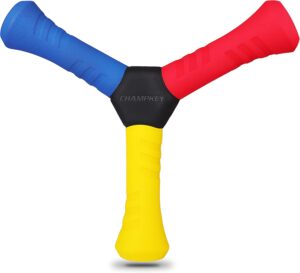
CHAMPKEY Hand Eye Coordination Trai…
Sturdy & Flexible : Made of premium polyurethane foam material features non-toxic , lightweight and waterproof….
