
Best Tennis Training Tools for Solo Practice
Practicing alone can be the fastest way to improve consistency, footwork and shot selection. With the right tools you can simulate live rallies, sharpen reflexes and build court-specific fitness without a hitting partner.
This guide lists dependable solo-practice tools, explains how to use each safely and gives simple drill ideas you can adopt immediately. Focus on quality over quantity: one or two well-chosen tools plus a plan will produce better progress than buying every gadget.
Rebound Trainers: Simulating Live Rallies
A rebound trainer is the cornerstone of solo hitting—perfect for developing timing, stroke feel and directional control. Set up 10–15 feet from a wall or on court, vary your contact point and work on directional targets. For full-court feeds and realistic ball return angles, consider a durable model designed for consistent tension like the Hikeen Premium Tennis Trainer Rebound. Start with medium-paced rally drills and progress to simulated match-speed feeds.
Ball Feeding & Collection: Save Time, Increase Reps
To keep repetitions high you need efficient ball feeding and collection. A ball hopper lets you carry and feed large quantities of balls for serving practice and target drills. Use a hopper to stand-and-serve, or to feed yourself groundstrokes quickly between footwork sets. Portable, foldable designs are best for easy storage—one reliable option is the YooKoo Tennis Ball Hopper for 150 Balls, which simplifies continuous practice sessions.
Reaction & Hand-Eye Tools: Sharpen Reflexes
Solo practice should include reaction work to bridge the gap between motor patterns and match tempo. Small, portable reaction tools (toss-and-catch drills, reaction lights, target cones) train visual processing and split-second adjustments. Add short, high-intensity reaction sets between hitting segments to enhance readiness. For purpose-built equipment, explore targeted systems in the Reaction Training Equipment category to find ball machines, rebound targets and visual reaction aids suited for tennis-specific drills.
Footwork & Agility: Court Movement Essentials
Footwork wins points. Agility ladders, cones and mini-hurdles build quick feet, improve stride patterns and reinforce recovery steps. Short, structured ladder sessions (20–60 seconds per rep) before hitting accelerate neuromuscular timing. A compact set that includes ladder and cones—like the X-UMEUS Agility Ladder Speed Training Set—gives variety for lateral quickness, crossover steps and split-step drills. Combine ladder drills with short sprints and shadow strokes for match-relevant conditioning.
Balance & Core Stability: Foundation of Power
Stable balance and a strong core translate to cleaner contact and more consistent serves. Balance boards and core rollers force you to control the kinetic chain under unstable conditions, which strengthens small stabilizers used in tennis. Use a wobble board for 30–60 seconds sets focused on single-leg balance, then transition to rotational core work. For home or court-side core training, consider a durable balance trainer such as the Amazon Basics Wood Wobble Balance Trainer and add specific core rollers like the VINSGUIR Ab Roller Wheel for progressive overload on rotation and anti-extension strength.
Resistance & Strength Tools: Sport-Specific Power
Resistance bands and tubing are versatile for solo sessions—they load the muscles used in the serve, forehand and wrist snap without heavy machines. Incorporate short-band shoulder external/internal rotations, banded lateral walks and resisted shadow swings. Bands are portable for warm-ups and integrated strength sets; a multi-level option like the Resistance Bands for Working Out, 5-Pack covers a wide range of resistance for progressive practice.
Conditioning & Recovery: Keep Training Sustainable
Conditioning tools (jump ropes, sleds, interval timers) build match endurance, while recovery tools protect longevity. Between intense sessions use percussion and rolling tools to flush lactic acid and reduce soreness. A high-quality percussion device like the BOB AND BRAD X6 Pro Max Massage Gun helps accelerate recovery when used for short, focused sessions on shoulders, quads and calves.
Quick Checklist for Solo Training Sessions
- Plan 45–75 minute sessions: warm-up, skill block, footwork/agility, conditioning, recovery.
- Bring 75–150 balls in a hopper to maximize hitting time.
- Include 2–3 reaction or footwork drills between hitting sequences.
- Rotate tools weekly (rebound focus, footwork focus, power focus) to avoid plateaus.
- Finish with 5–10 minutes of mobility and 5 minutes with a massage or foam roll to aid recovery.
FAQ
- How often should I use a rebound trainer? 2–4 times per week for technical work, with shorter sessions focused on consistency and placement.
- Can resistance bands replace gym sessions? They complement gym work well and are sufficient for tennis-specific strength if you progress resistance and include compound movements.
- Which footwork tool gives the best transfer to matches? Ladder work combined with on-court shadowing transfers best—use an agility ladder set like the X-UMEUS and mimic real stroke patterns.
- How long should recovery massage sessions be? Short, targeted 2–5 minute per muscle-group sessions after training are effective; focus on high-tension areas like shoulders and calves.
- Are balance boards safe for beginners? Yes—start with two-foot holds and short durations, then progress to single-leg and dynamic movements as stability improves.
Conclusion
Solo practice is most productive when it’s structured and tool-supported. Prioritize a rebound trainer for stroke repetition, a ball hopper for high reps, agility tools for movement, and resistance core or bands for power. Add targeted recovery to stay available for consistent training. Pick two to three of the tools above, build a simple weekly plan, and track progress by measurable drills (e.g., target hits per set, reaction time, consistent serves).
Products Featured in This Article
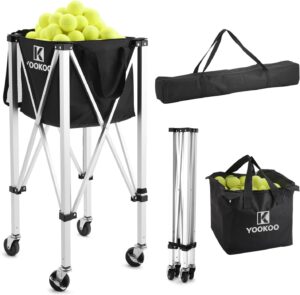
YooKoo Tennis Ball Hopper for 150 B…
Product description Help focus on the tennis training; Keep the beat in the game150 tennis balls…
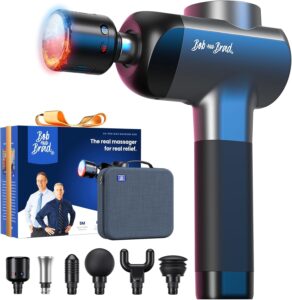
BOB AND BRAD X6 Pro Max Massage Gun…
Product description Meet Bob & Brad: Trusted by 5 Million The Internet’s Most Famous Physical Therapists…
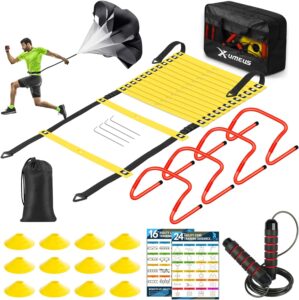
X-UMEUS Agility Ladder Speed Traini…
Agility Ladder Speed Training Equipment Set for anyone looking to increase their Agility, Speed, Balance, Explosiveness,…
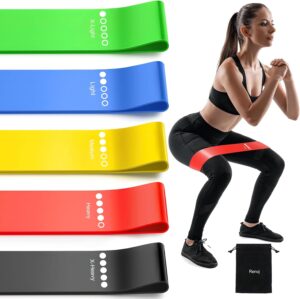
Resistance Bands for Working Out, 5…
Complete 5-Pack Fitness Kit: This versatile set of durable resistance bands includes 5 multi-level exercise bands…

VINSGUIR Ab Roller Wheel, Abs &…
Product description The video showcases the product in use.The video guides you through product setup.The video…
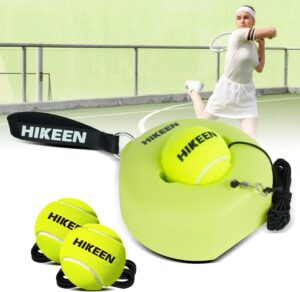
Hikeen Premium Tennis Trainer Rebou…
Hikeen Premium Tennis Trainer Rebound with Metal Base [DURABLE METAL BASE]:Hikeen tennis trainer rebound upgraded with…
