
How to Choose the Right Tennis Racquet for Your Playing Style
Choosing the right tennis racquet is one of the most practical decisions you can make to improve performance and stay comfortable on court. The right racquet complements your strengths, compensates for weaknesses, and reduces the risk of injury when paired with proper technique and conditioning.
Below is a clear, trustworthy guide to match racquet characteristics to common playing styles, plus a short checklist and FAQ to help you make a confident choice.
Know Your Playing Level and Goals
Start by assessing skill level (beginner, intermediate, advanced) and goals (power, control, spin, injury prevention). Beginners usually benefit from larger head sizes and lighter, more forgiving frames; advanced players often prefer smaller head sizes, heavier frames, and tighter string patterns for precision.
If you’re shopping for equipment and accessories while comparing models, check the brand’s selection to see the range available: Tennis Integrity.
Head Size — Power vs. Control
Head size is a primary determinant of power and forgiveness. Larger heads (100–115+ sq. in.) create a bigger sweet spot and more power, great for baseliners or players who want easier depth from a shorter swing. Smaller heads (85–98 sq. in.) offer more control and feel, favored by serve-and-volley players and precision-oriented baseliners.
Match head size to your style: recreational players or those developing consistent contact should lean toward more forgiving head sizes; advanced hitters chasing shot placement should consider smaller heads for feedback and control.
Weight and Balance — Stability and Maneuverability
Frame weight and where that weight sits define how the racquet feels. Heavier racquets (around 320g+ strung) stabilize the ball at impact and reduce vibration, benefiting heavy hitters who want plow-through. Lighter racquets (under 300g) are more maneuverable for quick reaction and fast racquet-head speed.
Balance matters too: head-heavy racquets add power and stability on groundstrokes, while head-light racquets speed up the head for volleys and quick defensive shots. If you’re unsure, demoing several options is crucial.
String Pattern and Tension — Spin, Control, Comfort
Open string patterns (e.g., 16×19) bite the ball more and help generate spin; dense patterns (e.g., 18×20) provide durability and greater control. String tension affects comfort and response: lower tension gives more power and a softer feel, higher tension gives more control but can increase shock through the arm.
If you worry about arm discomfort, consider pairing a racquet choice with off-court conditioning like resistance training to build supportive muscles — for example, strength bands designed for tennis training: Strength Training Bands.
Swing Speed and Playing Style
Your natural swing speed should guide weight and stiffness choices. Players with fast swings can use heavier, stiffer frames to harness racquet stability and control. Slower swingers often benefit from lighter, more flexible frames that generate power without needing an aggressive swing.
Improving footwork and agility can increase effective swing speed and help you handle a wider variety of racquets—consider training tools that develop quickness and court positioning, such as the X-UMEUS Agility Ladder Speed Traini….
Grip Size, Handle Shape, and Comfort
Grip size affects control and joint health. A grip too small requires extra squeezing and increases risk of wrist and elbow strain; too large impedes wrist snap and feel. Measure grip size properly (ruler or index finger test) and, when in doubt, go slightly smaller—wrap overgrips to fine-tune thickness. Consider vibration-dampening accessories, and if you experience persistent discomfort, pair racquet selection with recovery supports available through targeted categories.
Junior and Beginner Considerations
Kids need lighter, shorter, and more forgiving racquets sized for their height and strength. Junior-specific racquets encourage proper technique and prevent compensatory movements. For very new players, starter packs bundle racquets and balls sized to developmental needs.
If you’re choosing for a child, review junior-specific options like Kids Tennis Racquets and consider beginner kits such as Beginner Tennis Sets to make learning easier and more fun.
Demoing, Budget, and Practical Choices
Always try before you buy where possible. Demo sessions reveal how a racquet feels under real conditions—serves, volleys, rallies. If you’re buying online, pick a retailer with a good return/demo policy. Set a budget but prioritize the racquet that matches your playing style; sometimes a modest upgrade in racquet performance yields more on-court improvement than expensive lesson blocks.
If you want a ready-to-play adult option to gauge what suits you, compare specific models such as the Adult 2 Player Tennis Racket Perfec… as a reference point for weight, head size, and included accessories.
Off-Court Training and Supportive Gear
Racquet choice pairs best with complementary training: core stability, reaction time, and conditioning all help you use the racquet to its potential. Core control improves stroke consistency; consider tools focused on the midsection: Core Training Equipment.
Finally, protect and transport your racquets properly—invest in a durable bag that holds racquets, strings, and accessories. A practical option to organize gear and protect your frames is the BAGSMART Tennis Gym Bag for Women, ….
Quick Checklist
- Identify level and goals: beginner, intermediate, advanced.
- Match head size to power/forgiveness needs.
- Select weight and balance for your swing speed and stability needs.
- Choose string pattern and tension for desired spin/control.
- Measure grip size and adjust with overgrips as needed.
- Demo before buying; check return/demo policies.
- Pair racquet choice with off-court conditioning and protective gear.
FAQ
- How do I know my correct grip size? — Measure from the middle crease of your palm to the tip of your ring finger, or try racquet handles and use the index finger test; a snug one-finger gap is ideal.
- Should beginners buy a heavy or light racquet? — Beginners usually start with lighter, more forgiving racquets that help generate power with shorter swings and reduce fatigue.
- Do strings matter more than racquet frame? — Both matter. The frame sets baseline feel and balance; strings fine-tune power, control, and spin. Adjust strings before changing frames if possible.
- When should I move to a stiffer/heavier racquet? — As your technique, strength, and consistency improve, a heavier or stiffer frame can provide added stability and control; transition gradually and test via demo sessions.
- Can training equipment help me handle a different racquet? — Yes. Improving core strength, agility, and reaction time makes it easier to handle heavier frames or play with more control and spin; integrate sport-specific drills into training.
Choosing the right racquet is a practical process: match head size, weight, balance, grip, and strings to your style, demo options, and support your selection with focused training and proper gear. Use the checklist above, try a few demos, and invest in a racquet that helps you enjoy tennis and play better.
Official Tennis Federation Resources
For the latest rules, rankings, tournaments, and development programs, check these leading tennis federations:
- International Tennis Federation (ITF)
- ATP Tour
- WTA Tennis
- United States Tennis Association (USTA)
- Tennis Australia
- Tennis Europe
Products Featured in This Article
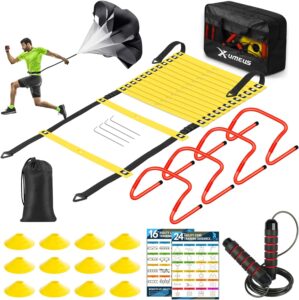
X-UMEUS Agility Ladder Speed Traini…
Agility Ladder Speed Training Equipment Set for anyone looking to increase their Agility, Speed, Balance, Explosiveness,…

Adult 2 Player Tennis Racket Perfec…
From the brand About US 1. More than 20 YEARS in the professional sports field 2….

BAGSMART Tennis Gym Bag for Women, …
From the brand Gym bags Summer travel essentials Duffle bags Tote bags Electronic bags Toiletry bags…
