
How to Improve Your Tennis Footwork at Home
Great footwork is the foundation of consistency, balance and power on the court. You don’t need a tennis court or a trainer to make measurable progress — with focused practice and the right tools you can sharpen movement, speed and stability at home.
This guide gives practical drills, a simple weekly plan and equipment recommendations you can use in a small space. Follow the progressions, keep sessions short and purposeful, and you’ll notice quicker recovery steps, tighter positioning and better shot preparation.
Why footwork matters (and what to measure)
Footwork determines whether a technically good swing becomes an effective shot. Key qualities to develop are first-step explosiveness, lateral quickness, balance under load and consistent recovery to a neutral ready position. Use simple measures: time your first step to a coach’s feed, count how many split-step repetitions you can do in 30 seconds without losing form, or record short video clips to compare posture and recovery over weeks.
To build these qualities you’ll benefit from targeted practice and the right small-space tools. The Speed and Agility Training Gear category has compact options that fit living rooms, driveways or backyard spaces and are ideal for progressive footwork work.
Warm-up and mobility routine (5–8 minutes)
Start every session with movement to raise heart rate and prep joints. A simple warm-up: 60 seconds of light skipping or marching, 30 seconds each of ankle circles and hip openers, then 30–60 seconds of quick-feet drills. If you want a compact cardiovascular tool for warm-ups and quick conditioning sets, check the Jump Ropes for Tennis Conditioning category — a jump rope is one of the easiest ways to tune timing, rhythm and lower-leg resilience.
Quick-feet drills you can do in a living room
Drills to practice in a small space focus on speed, short bursts and controlled landings. Use 10–20 second efforts with rest; quality matters more than volume.
- High knees — 3 x 20 seconds, rapid but controlled.
- Dot-hop pattern — use tape or markers and hop between four points with quick two-foot or single-foot landings.
- Ladder patterns — if you want a portable ladder set for precise foot placement and progressive patterns, the X-UMEUS Agility Ladder is compact and gives immediate structure for drills like one-in-one-out, lateral two-feet, Icky Shuffle and crossover runs.
Improve balance and weight transfer
Good tennis footwork depends on balance and the ability to shift weight quickly from foot to foot. Spend short, focused sets on unilateral balance and controlled transfers:
- Single-leg holds — 3 x 30 seconds per leg, progress to unstable surfaces.
- Slow lateral step-and-hold — step laterally into a split stance and hold balance while simulating a stroke preparation.
- Board drills — balance tools simulate court instability and force small corrective movements that transfer to on-court balance. Consider the Balance Boards for Tennis if you want structured progressions that increase proprioception and ankle stability.
Train reaction and the split-step
Reaction speed and an effective split-step compress the time between opponent contact and your first recovery step. Practice reaction drills that couple recognition with movement:
- Partner flash — partner calls left/right and you step; start slow and increase unpredictability.
- Ball drops — have someone drop a ball and react to move and catch it; useful for timing the split-step.
- Home reaction tools — compact reaction gear can create random visual or audible cues to challenge your response. The Reaction Training Equipment category includes hand-held and floor options that simulate the unpredictability of a live rally.
Hand-eye and reflex tools that improve coordination
Improving footwork includes refining coordination between visual cues and movement. Short reaction-focused sessions sharpen this link without taxing endurance:
- Racket-tap reaction — toss a small target and tap it with your racquet while moving.
- Flash-cue sprints — a partner or a random light cue signals which side to sprint.
- For solo practice, consider compact training tools like the CHAMPKEY Hand Eye Coordination Trainer to simulate unpredictable returns and force rapid repositioning.
Strength and core exercises for better footwork
Powerful, stable steps come from core engagement and hip/leg strength. Do focused strength work 2–3 times per week: bodyweight exercises, resistance-band movements and short loaded circuits.
- Bulgarian split squats — 3 x 6–8 each leg for single-leg strength.
- Hip hinge and single-leg deadlift variations — 3 x 8 per side to build posterior chain control.
- Core anti-rotation holds and Pallof presses to keep the torso stable during dynamic movement.
If you want compact tools to add to a home routine, explore the Core Training Equipment selection for practical items that target midline stability and transfer force into faster, more controlled court movements.
Putting it together: a 20-minute at-home footwork session
Use this template 3–4 times per week. Adjust intensity and rest as fitness improves.
- Warm-up (5 minutes): jump rope or light mobility — a simple tool like the Jump Rope, Tangle-Free Rapid Speed gives consistent rhythm for 2–3 minutes.
- Quick-feet ladder or dot drills (6 minutes): 4 rounds of 30 seconds work / 30 seconds rest using ladder patterns or dot hops.
- Balance & reaction (4 minutes): single-leg holds with reactive cues or 3 x 30-second balance board sets.
- Strength/core blast (4 minutes): 2 rounds of Bulgarian split squats (8 per side) + 30-second core anti-rotation hold.
- Cool-down (1 minute): light ankle circles and diaphragmatic breathing.
Checklist: daily and weekly progress markers
- Daily: 5–10 minutes focused warm-up + 1 speed drill.
- 3x per week: one structured 20-minute session (template above).
- Weekly: record a 10–20 second video to check split-step timing and recovery posture.
- Every 4 weeks: increase drill difficulty (ladder patterns, unstable surface, faster cues).
- Equipment to consider: agility ladder, jump rope, balance board, simple reaction trainer.
FAQ
- Q: How much space do I need?A clear 6–10 ft area is enough for most drills; ladder drills need a little more length. Many drills can be scaled to hallways or driveways.
- Q: How often should I practice footwork?Short daily warm-ups (5–10 minutes) plus 2–4 structured sessions per week give fast improvements without overtraining.
- Q: Can I improve footwork without equipment?Yes — dot hops, shuffles, single-leg balance and partner reaction drills are effective. Equipment accelerates progress and adds measurable structure.
- Q: When will I see results?Many players notice better balance and quicker first steps within 3–6 weeks with consistent, focused practice.
- Q: Is plyometric training necessary?Not at first. Start with control and speed. Add plyometrics once you have stable landings and good single-leg strength.
Conclusion — a practical takeaway
Improving tennis footwork at home is about consistent short practices, progressive challenge and targeted strength. Start with reliable warm-ups, add controlled quick-feet drills, use a balance tool or reaction trainer to increase specificity, and reinforce the work with core and single-leg strength. Small, frequent efforts produce durable gains — pick two drills, measure progress, and build from there.
Official Tennis Federation Resources
For the latest rules, rankings, tournaments, and development programs, check these leading tennis federations:
- International Tennis Federation (ITF)
- ATP Tour
- WTA Tennis
- United States Tennis Association (USTA)
- Tennis Australia
- Tennis Europe
Products Featured in This Article
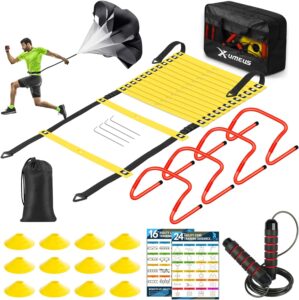
X-UMEUS Agility Ladder Speed Traini…
Agility Ladder Speed Training Equipment Set for anyone looking to increase their Agility, Speed, Balance, Explosiveness,…
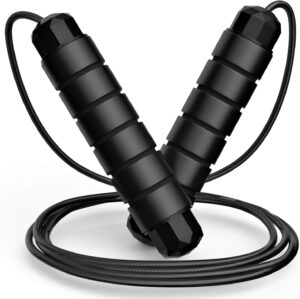
Jump Rope, Tangle-Free Rapid Speed …
Product description The video showcases the product in use.The video guides you through product setup.The video…
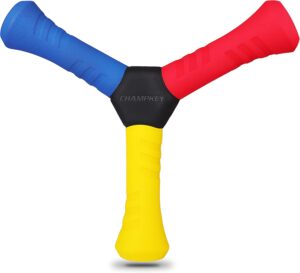
CHAMPKEY Hand Eye Coordination Trai…
Sturdy & Flexible : Made of premium polyurethane foam material features non-toxic , lightweight and waterproof….
