
Short on court time but serious about improvement? You’re not alone. Many players juggle work, family and training, and still want efficient, measurable progress. The key is structured, high-impact sessions that focus on the specific skills and physical qualities that transfer directly to match play.
This guide gives practical, time-smart practice plans, gear suggestions and recovery strategies so you get more from every minute on court. Use these tips to create dependable micro-sessions that build consistency, movement and power without long, unfocused hours.
1. Define a clear objective for each short session
When you have 20–45 minutes, pick one primary goal: serve placement, rally control, first-step explosiveness or short-court transition. A single-focus session prevents scattershot practice and helps you measure progress week to week. For footwork and short bursts, consider compact training gear that targets speed directly — Speed and Agility Training Gear is ideal for quick, repeatable drills that improve first-step and change of direction.
2. Micro-session templates: what to do in 20, 30 and 45 minutes
Use a consistent template: warm-up (5–7 min), focused skill block (10–25 min), quick conditioning or strength (5–10 min), short cooldown (2–5 min).
- 20 minutes: dynamic warm-up + 12–15 focused reps of a technical drill (e.g., serve to T or high-backhand crosscourt) + 5 min mobility.
- 30 minutes: warm-up with jump rope + 15 minutes of point-simulation drills + 8 minutes of band-resisted strength work.
- 45 minutes: warm-up + 20–25 minutes of pattern play (with a partner or rebounder) + 8–10 minutes conditioning.
For fast, controlled warm-ups that raise heart rate without wasting time, a quality Jump Ropes for Tennis Conditioning set is perfect — 2–5 minutes of intense skipping quickly primes the nervous system and foot speed.
3. Solo technical work that transfers to match play
If you practice alone, use tools that create realistic ball trajectories and repetition. Short, focused rep-counts beat aimless rallying: do sets of 10–15 high-quality serves, 20 directed volleys or 30 crosscourt rally strokes with a purpose. A compact rebound trainer lets you practice rally patterns and reaction under time constraints — a Hikeen Premium Tennis Trainer Rebound is ideal for solo repetition and for simulating match-like returns when you have only a few minutes.
4. Footwork and reaction drills you can do in a small space
Short sessions should include drills that reinforce efficient movement: ladder sequences, short cone shuffles, and mirror-reaction drills. Keep sets short (15–30 seconds hard, 30 seconds rest) and focus on acceleration and balance. To sharpen reflexes in a minimal footprint, incorporate targeted reaction tools — try Reaction Training Equipment for quick-response exercises that boost anticipation and hand-eye timing.
5. Strength, stability and power with minimal equipment
You don’t need a gym to maintain tennis-specific strength. Two to three exercises per session repeated twice a week will preserve power and reduce injury risk. Key focuses: single-leg balance, core anti-rotation and shoulder stability. Short sets of band work (10–15 reps) fit neatly into a 10-minute block. Portable strength tools make this realistic — stock simple resistance tools like Strength Training Bands for quick loaded movements and progressive tension in tight time windows.
6. Make equipment choices that save time
Small investments speed up practice and eliminate wasted minutes collecting balls or setting up. Use a ball hopper for faster feeding and collection, and a rebound trainer for solo pattern practice so you can hit continuous strokes without waiting for balls — for example, the YooKoo Tennis Ball Hopper reduces transition time between drills and keeps sessions focused.
7. Short warm-down and active recovery to protect practice gains
A five-minute cooldown after intense bursts preserves mobility and reduces soreness. Foam rolling and targeted percussion accelerate tissue recovery when you’re training often but briefly — keep a roll and percussive tool handy so recovery happens immediately. Two effective options are Foam Rollers for Tennis Players and compact Massage Guns for Tennis Recovery for short pre- or post-session protocols that maintain readiness for the next practice.
8. Quality control: track what you practice
Keep a short practice log: date, session length, objective, three drills with sets/reps, and one measurable outcome (e.g., first-serve percentage, crosscourt rally length). Reviewing this weekly helps you prioritize which micro-sessions to schedule when time is limited.
Quick checklist before you hit the court
- Define one clear objective for today’s session.
- Pack efficient gear (balls in hopper, bands, jump rope, towel, water).
- Warm up dynamically for 5–7 minutes (skipping or mobility).
- Do focused, timed drill blocks — quality over quantity.
- Finish with 3–5 minutes of foam rolling or percussion to recover.
FAQ
- Q: How often should I do a 20–30 minute session?
A: Aim for 3–5 short sessions per week; alternate technical focus and conditioning to avoid overload. - Q: Can short sessions really improve serve consistency?
A: Yes—structured repetition with clear targets (10–20 high-quality serves) increases motor learning faster than unfocused longer practice. - Q: What’s the best warm-up when time is tight?
A: Two minutes of jump rope and three minutes of dynamic mobility prepares the nervous system and joints quickly; a dedicated jump rope or similar tool speeds this up. - Q: Should I prioritize strength or on-court time?
A: Balance both: two short strength sessions (15–20 min) per week preserve power and reduce injury, while the rest of the week focuses on court skills. - Q: How do I keep motivation when sessions are short?
A: Set small, measurable targets per session and track them. Visible progress in accuracy or reaction times sustains commitment.
Conclusion — practical takeaway
Short, consistent sessions with a single objective, compact supportive gear and immediate recovery deliver real improvement. Use focused templates, rely on efficient tools like ball hoppers and rebounders, add brief strength and reaction work, and cool down every time. With a tight plan and deliberate reps, limited court time becomes a strength—not a limitation.
Products Featured in This Article
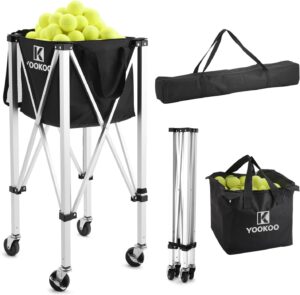
YooKoo Tennis Ball Hopper for 150 B…
Product description Help focus on the tennis training; Keep the beat in the game150 tennis balls…
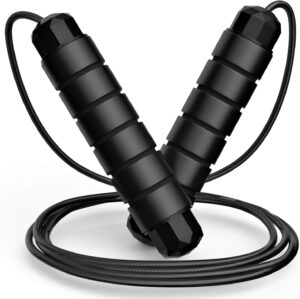
Jump Rope, Tangle-Free Rapid Speed …
Product description The video showcases the product in use.The video guides you through product setup.The video…
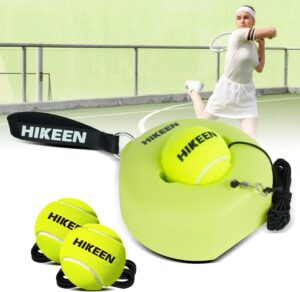
Hikeen Premium Tennis Trainer Rebou…
Hikeen Premium Tennis Trainer Rebound with Metal Base [DURABLE METAL BASE]:Hikeen tennis trainer rebound upgraded with…
